Table of Contents
Introduction
Artificial intelligence has transformed how we work, think, and innovate — from chatbots and image recognition to drug discovery and robotics. Yet, as BBC News reports, quantum computing may soon eclipse even AI’s impact.
According to leading scientists and industry experts interviewed by the BBC, the global race to achieve quantum advantage — the point where quantum computers outperform classical systems — is accelerating. While AI optimizes data we already understand, quantum computing could redefine what’s possible in the first place.
In essence, where AI interprets patterns, quantum computing changes the rules of the game itself.
What the BBC Article Reveals
In the BBC News feature, multiple voices from the tech and scientific community emphasize that quantum computing may revolutionize science and industry at a more fundamental level than AI has so far.
Dr. Ilyas Khan, founder of Cambridge Quantum, told the BBC that quantum computing will be “bigger than AI,” not because it replaces it, but because it extends the boundaries of computational science itself.
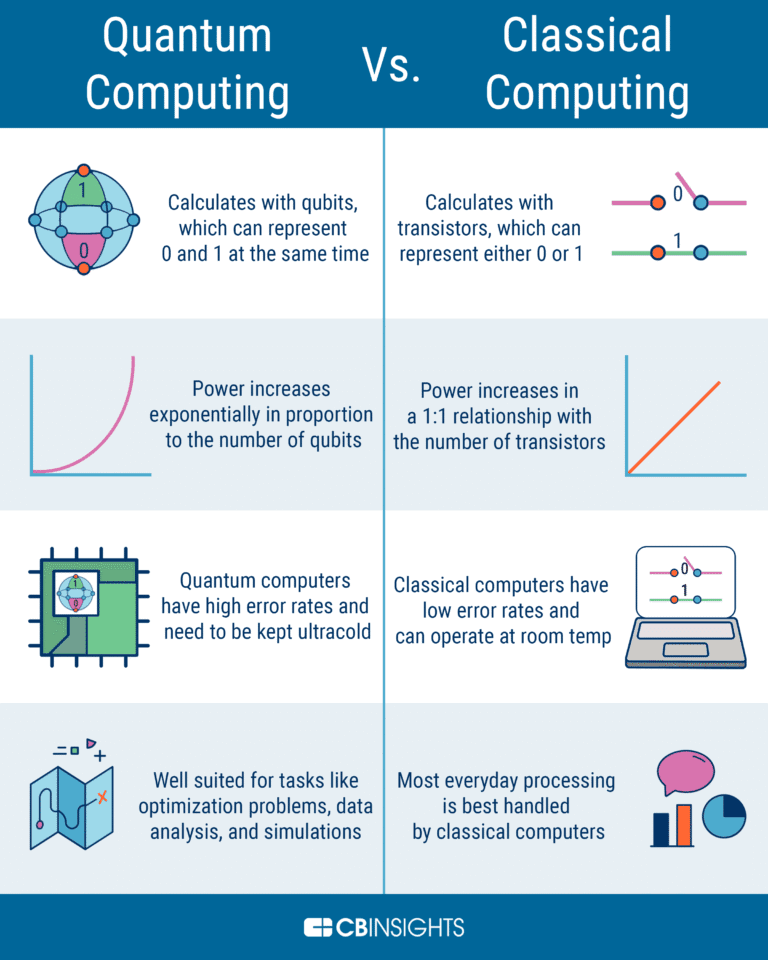
Unlike AI, which relies on classical processors and statistical learning, quantum systems harness the laws of quantum mechanics — superposition and entanglement — to explore multiple solutions simultaneously.
The result could be exponential improvements in problem-solving, simulation, and optimization — particularly in chemistry, materials science, cryptography, and logistics.
Why Quantum Computing Matters Now
Quantum computing is not science fiction anymore. The BBC article highlights how governments, research institutions, and tech giants are now investing billions into quantum technologies.
Firms like IBM, Google, and IonQ, along with national programs in the US, UK, China, and the EU, are all racing to develop stable, scalable quantum systems.
Whereas AI has matured over the past decade, quantum is at a similar stage to AI’s early 2010s moment — full of hype but also genuine breakthroughs on the horizon.
One expert quoted in the article notes that, once the hardware and error-correction challenges are solved, quantum computing could “do for the 2030s what AI did for the 2020s.”
The BBC also points out that quantum progress is not about raw speed alone. The true power lies in the type of problems quantum can solve — modeling molecules, optimizing energy networks, or designing new materials at atomic precision — tasks even the most powerful AI models cannot compute effectively with classical hardware.
Complementarity, Not Competition: AI + Quantum
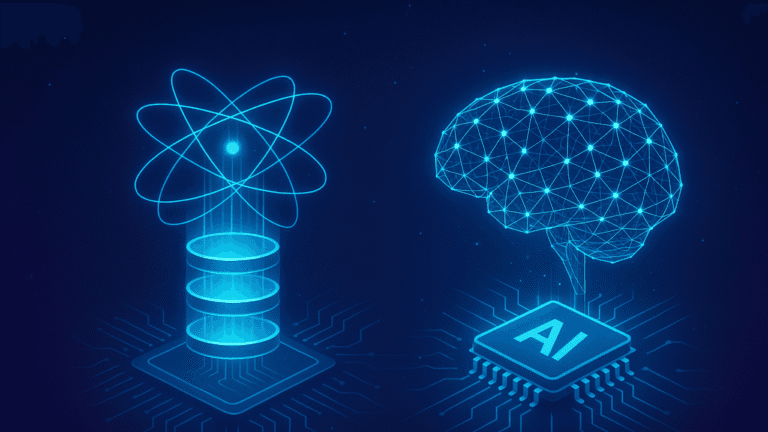
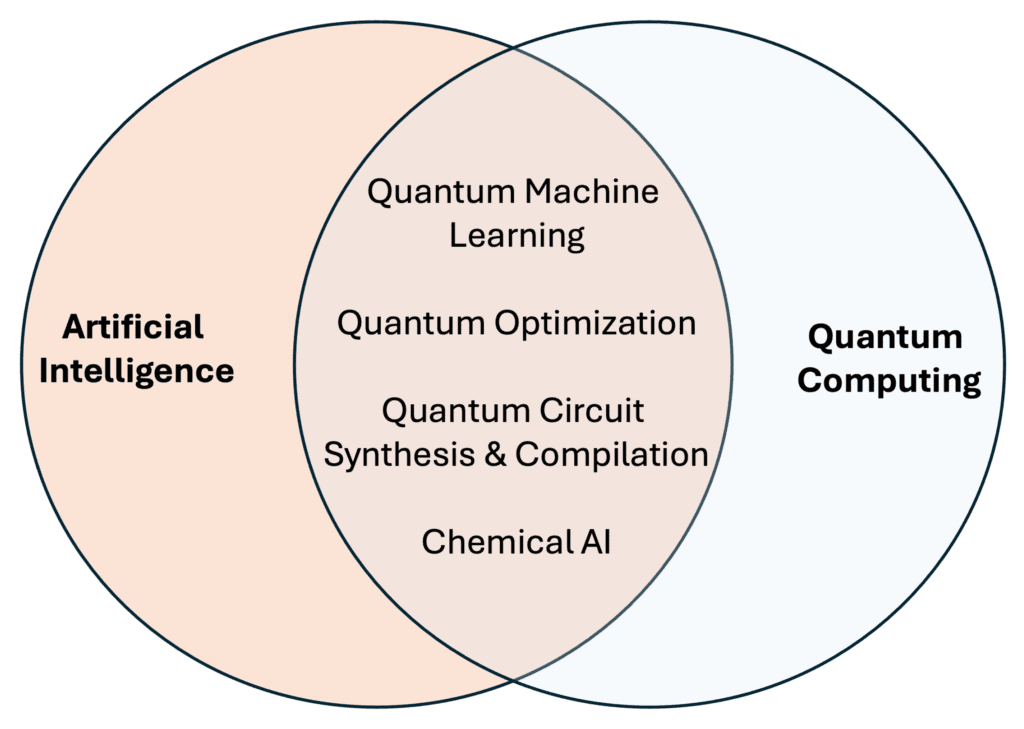
Rather than replacing AI, quantum computing could supercharge it. The article quotes industry analysts who foresee “quantum-enhanced AI”, where quantum computers enable faster and more accurate training of models.
Conversely, AI will help design and control quantum systems, managing the delicate qubits that form the heart of these machines.
This symbiosis between quantum and AI — one driving intelligence, the other computation — could redefine innovation across multiple domains:
- Drug discovery and materials design: Quantum models simulating complex molecules.
- Finance and logistics: Quantum algorithms optimizing risk, delivery, and production networks.
- Cybersecurity: Post-quantum encryption to protect digital infrastructure.
- Climate modeling: Quantum simulations providing unprecedented insight into environmental systems.
This is precisely the kind of interdisciplinary frontier that BMF-Science seeks to highlight — where research collaboration and technology transfer merge to create transformative impact.
The Challenges Ahead
While the BBC report highlights optimism, it also stresses realism. True quantum advantage remains a technical and engineering challenge.
Quantum systems are incredibly fragile — qubits must be maintained at near-absolute zero temperatures, shielded from the slightest environmental noise.
Experts warn that we are still years away from practical, fault-tolerant quantum machines that can outperform classical supercomputers across most tasks.
However, early prototypes are already achieving specific quantum milestones, and every incremental step — from qubit stabilization to algorithm design — fuels new scientific progress.
The BBC article concludes that the real value lies in the research ecosystem forming around quantum: partnerships between academia, industry, and national laboratories building the foundation for the next era of computing.
Global Race and Collaboration
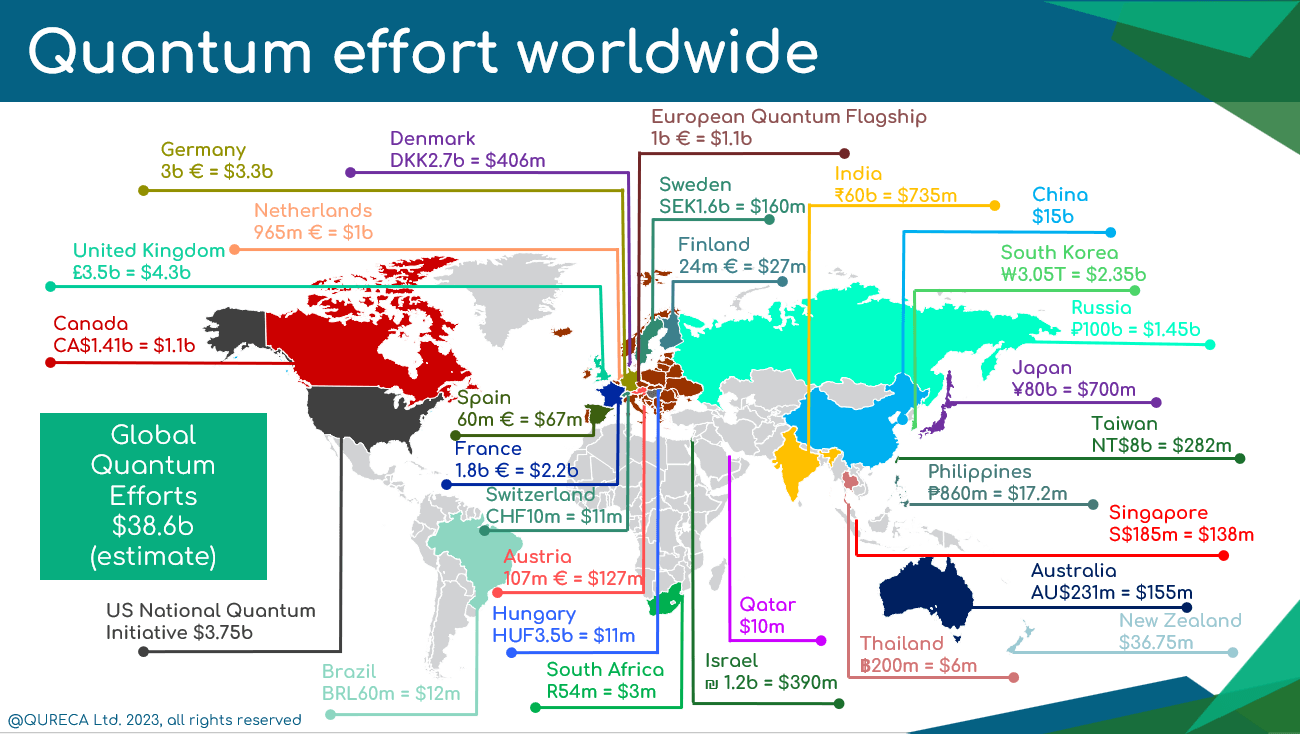
Countries worldwide view quantum as both an economic and strategic priority.
The BBC highlights that the US and China are leading in hardware development, while Europe and the UK focus heavily on quantum software and networks.
This international competition is also fostering cooperation: scientists are sharing open data, startups are partnering with universities, and tech companies are collaborating across borders to build quantum supply chains and standards.
Just as AI gave rise to ecosystems of data scientists and cloud engineers, quantum will create new disciplines — quantum programmers, error-correction specialists, and materials researchers working in tandem.
BMF-Science Perspective
At BMF-Science, we recognize the parallels between the AI revolution and the quantum transition now unfolding.
Both revolutions depend on the same foundation: collaboration between researchers, technologists, and industry leaders.
Quantum computing represents not just a new technology, but a new way of thinking — one that redefines the boundaries of research, modeling, and computation.
For global scientific communities, it offers opportunities to develop cross-disciplinary expertise that will shape materials science, climate modeling, cryptography, and healthcare for decades.
Our mission is to connect these domains — linking scientists, industrial innovators, and policymakers to ensure that quantum technologies translate from laboratories into real-world solutions.